SALT LAKE CITY — A Salt Lake man who police say shot at another man who was giving his ex-wife a ride was charged with two felonies on Monday.
Mario E. Regules, 32, is charged in 3rd District Court with attempted murder, a first-degree felony, and possession of a firearm by a restricted person, a second-degree felony.
On March 13, a man said he was waiting outside the house of Regules’ ex-wife to pick her up. While he was waiting, he received a text message from the woman telling him “that her ex-husband, the defendant Mario Regules, was waiting close by. She told (the man) to leave or Regules would kill him,” according to charging documents.
Surveillance video from the area recorded Regules parked down the street, police say. When the victim left the ex-wife’s house, he drove past Regules. Surveillance video shows Regules pointing a gun at the man and firing, the charges state.
Five bullet holes were found on the victim’s car, “spanning from the front fender to the back door,” the charges state. The man, however, was not injured.
The man also told police that four months earlier while he was again at the ex-wife’s house, “Regules pointed a gun at (the man’s) head and told him that he was going to kill him,” according to charging documents.
Regules, a documents gang member, also had a warrant out for his arrest for failing to show up for court on charges of drug possession, according to court records. Prosecutors also noted in charging documents that Regules “has a history of committing violent offenses” and “is known to flee from law enforcement.”
“On two separate occasions the police have attempted to apprehend the defendant on this case and defendant had fled, resulting in two separate felony evading cases. The defendant has demonstrated through his actions that he is a danger to the community, and a flight risk,” the charges state.
The national office of the NCAA in Indianapolis is shown Thursday, March 12, 2020. The NCAA canceled the men’s and women’s Division I basketball tournaments amid coronavirus fears on Thursday. | Michael Conroy, AP
SALT LAKE CITY — NCAA Division I student-athletes who compete in spring sports will have an additional season of competition and an extension of their period of eligibility, the NCAA Division I Council ruled Monday as college athletics have been impacted by the conoravirus pandemic.
There won’t be any eligibility relief for student-athletes in winter sports, as the majority of their seasons were completed, the council also announced.
NCAA championships for both winter and spring sports were canceled March 12, as the pandemic began to initially make its impact in the sports world.
The national office of the NCAA in Indianapolis is shown Thursday, March 12, 2020. The NCAA canceled the men’s and women’s Division I basketball tournaments amid coronavirus fears on Thursday. | Michael Conroy, AP
SALT LAKE CITY — NCAA Division I student-athletes who compete in spring sports will have an additional season of competition and an extension of their period of eligibility, the NCAA Division I Council ruled Monday as college athletics have been impacted by the conoravirus pandemic.
There won’t be any eligibility relief for student-athletes in winter sports, as the majority of their seasons were completed, the council also announced.
NCAA championships for both winter and spring sports were canceled March 12, as the pandemic began to initially make its impact in the sports world.
SALT LAKE CITY — The coronavirus is putting pressure on employees forced to take time off to contend with the effects of the ongoing outbreak on themselves and their families, as well as employers who must manage their companies’ operations in the wake of legally-mandated leave.
Across the country and in Utah, companies and their workers are trying to balance the need to take time away from their jobs to cope with the impact of COVID-19 and keeping their jobs. While laws already exist to govern traditional sick leave, the pandemic has prompted even more regulations for employers to follow.
The Family Medical Leave Act of 1993 is a federal law applying to employers with 50 or more employees, or to all public employers. It requires these entities to provide to eligible employees unpaid time away from work up to 12 work weeks in a 12-month period of time, explained Ryan Nelson, president of Employers Council Utah. During that protected time, the worker’s health insurance and other benefits continue and they are provided reinstatement rights upon their return, he added.
“So when I come back from leave, I receive the same or an equivalent position to what I had when I left and I’m reinstated back into the workforce as if I’d never been gone,” he said. “The FMLA was available to an employee who had a serious health condition or who was caring for a parent, spouse or child with a serious health condition.”
Now Congress has added new protections developed specifically to address the effects of coronavirus on current workplaces, he noted. The Families First Coronavirus Response Act signed on March 18 also provides for paid family sick leave along with expanded emergency family and medical leave, he noted. It takes effect on April 1 and is required to be offered by an employer with 499 employees or less. The law also requires employers to provide their employees with the FFCRA poster detailing their rights under the new measure.
Employees who qualify must use the time off between April 1 and Dec. 31 of this year, Nelson said. Congress purposely created a sunrise and sunset on it because it related specifically to coronavirus, he said.
“(The law applies) regardless of how long the employee has been with the company. So my first day, for example, can be April 1 and on April 2 I could trigger the paid 10 days of sick leave and be gone even though I’ve only worked one day for the company,” Nelson explained. The provisions of the various acts work in tandem with the employment compensation system, he said.
“You have a lot of things working here at the same time. The paid sick leave and the paid FMLA contemplate an absence from work, so because I’m not working for these reasons I have some supplemental income coming in,” he explained. “It’s not going to be perhaps the same as I was making in wages, but it’s something that’s coming in. If I lose my job, or I’m laid off or I’m furloughed, then we have the unemployment compensation system that catches those instances and also the additional unemployment benefits. It’s an extraordinary effort in an extraordinary time.”
He said employers will have the benefit of using tax credits to offset some of the costs incurred through paying for the additional benefits received by the employees.
“Companies when they process their payroll, they are withholding Federal taxes from their employees wages. And then they put that into an electronic bundle and wire it to the IRS or submit it to the IRS as part of their payroll process,” Nelson said. “Well, the money to pay for the paid sick leave and the paid FMLA comes from that pot of money.”
Nelson said companies should seek advice from experienced counsel to ensure they are handling their workers’ leave properly and taking advantage of the credits being offered through the federal laws.
“There’s a limited window of time and that’s 30 days from the 18th of March,” he said. “So that clock is already ticking and employers are already expected to get their arms around this and understand what it means, when it applies, and how it works because April 1 it starts and employers need to be ready for that.”
Last week, I began to explore what life will be like when the coronavirus lockdown finally ends.
Initially, people will crave a return to in-person social gatherings and some sense of normalcy. Still, when the stay-at-home orders and mandatory business closings are lifted, the reopening of society will proceed cautiously. Guided by a mix of joy and fear, some people will jump right back into old routines while others will take it more slowly. Many, without consciously thinking about it, will never again attend events with huge crowds or ride a crowded subway.
Some businesses will open their doors and offices faster than others. Sadly, many will never reopen. Returning workers will learn new routines and procedures to ensure a safe and healthy work environment, especially for businesses that deal directly with consumers.
Politicians will debate what sort of international trade and travel restrictions might be appropriate going forward. What kind of security can protect against an invisible virus? Should the new restrictions apply only to China? Or to all nations? It will soon become clear that the pandemic has reset discussions on just about every political issue.
Still, it won’t be long before a new normal sets in. Our culture and lifestyle adapt so quickly to new realities that we soon forget what came before. If you doubt that’s true, consider the phrase social distancing. A month or so ago, hardly anybody had heard of it. Now it’s a part of daily conversation.
The realities of social distancing have forced us to learn new ways of working, playing and building community together. Millions of older Americans have joined virtual gatherings for the first time. Untold numbers of parents are — for the first time — providing a form of home-schooling. Churches are finding ways to serve their flock without getting together in person on Sunday mornings. The list could go on and on.
These new routines will never replace in-person gatherings — humans need such contact for their physical and mental well-being. But, when the crisis is over, the new approaches will not wither away or disappear. Americans will not unlearn what they are learning today. Instead, they will use what they have learned in ways that will alter the frequency and purpose of our face-to-face encounters with others.
A friend of mine works with a large team that has been forced to telecommute during the current crisis. It’s going so well that he’s now thinking of working from Florida for a month next winter. Following the experience of the past month, he figures his boss will have no reason to object. My friend values the regular, in-person interactions with his co-workers and will have plenty of it for most of the year. But the month in Florida will also give him more time with family and friends in a pleasant setting.
Millions of Americans will do the same and seamlessly adopt what they’ve learned during the lockdown to make changes in their daily life. After a while, it won’t seem different at all. It will just be a new normal.
Though the novelty of our new routines will quickly wear off, the impact of those changes will bring about massive social disruption. To take just one example, when my friend and his team telecommute more regularly, their company will need less office space. That seemingly minor change will ripple through the economies of major cities.
Beneath the surface, all of these changes are being driven by one of the most significant cultural changes in American history. Beginning in the 1970s, the digital revolution kicked off what I call the Great Turnaround:
• For two centuries leading up to the 1970s, the trend was for everything in America to get bigger, more centralized and more homogenized.
• After the ’70s, however, cultural trends moved in the opposite direction with everything becoming more niche-oriented, decentralized and personalized.
It is hard to overstate the significance of this cultural turnaround. “The devices and connectivity so essential to modern life put unprecedented p ower in the hands of every individual,” according to Harvard’s Nicco Mele. This is “a radical redistribution of power that our traditional institutions don’t and perhaps can’t understand.” As if that wasn’t enough, he adds, “Radical connectivity is toxic to traditional power structures.”
This decentralizing force has been transforming our society for decades. Many institutions and industries have already adapted or disappeared. Following the pandemic, the scale and pace of change will increase dramatically.
In the coming weeks, I’ll look at how our decentralizing culture is poised to bring about massive changes to our health care, education and political systems.
While transitions are always unsettling, we have reason to be optimistic about the future. That’s because this new era has put “unprecedented power in the hands of every individual.” That’s a good thing!
Taking power away from the few and giving it to the many is right in line with our nation’s founding ideals. From a pragmatic viewpoint, it means more people will have a greater ability to work together and create a better world.
Scott Rasmussen is an American political analyst and digital media entrepreneur. He is the author of “The Sun is Still Rising: Politics Has Failed But America Will Not.”
Cristyna Ramos, family involvement paraprofessional at Backman Elementary School, hands out food for students on Monday, March 30, 2020, as the Tony Finau Foundation and For The Kids work with volunteers in feeding 500 children each week at both Backman and Liberty elementary schools to ensure these at-risk children are fed through May due to COVID-19. | Scott G Winterton, Deseret News
Cristyna Ramos, family involvement paraprofessional at Backman Elementary School, hands out food for students on Monday as the Tony Finau Foundation and For The Kids work with volunteers to feed 500 children each week at both Backman and Liberty elementary schools in the Salt Lake City School District to ensure at-risk children due to COVID-19 are fed through May. Monday’s deliveries contained 31,000 meals and snacks for the week, along with hand soap and hygiene kits. PGA Tour golfer Tony Finau said in a news release that his foundation is “excited to partner with For The Kids and help provide relief during an extremely difficult time. Their support of the Rose Park community, where I am from, made this partnership an obvious choice. Our hope is that by taking care of and helping these kids and their families, they will get the nourishment they need and feel the spirit of love and community that makes Salt Lake City, and the whole state of Utah, a great place to call home.”
 Adobe Stock image
 The national office of the NCAA in Indianapolis is shown Thursday, March 12, 2020. The NCAA canceled the men’s and women’s Division I basketball tournaments amid coronavirus fears on Thursday. | Michael Conroy, AP
 Deseret News
 Deseret News
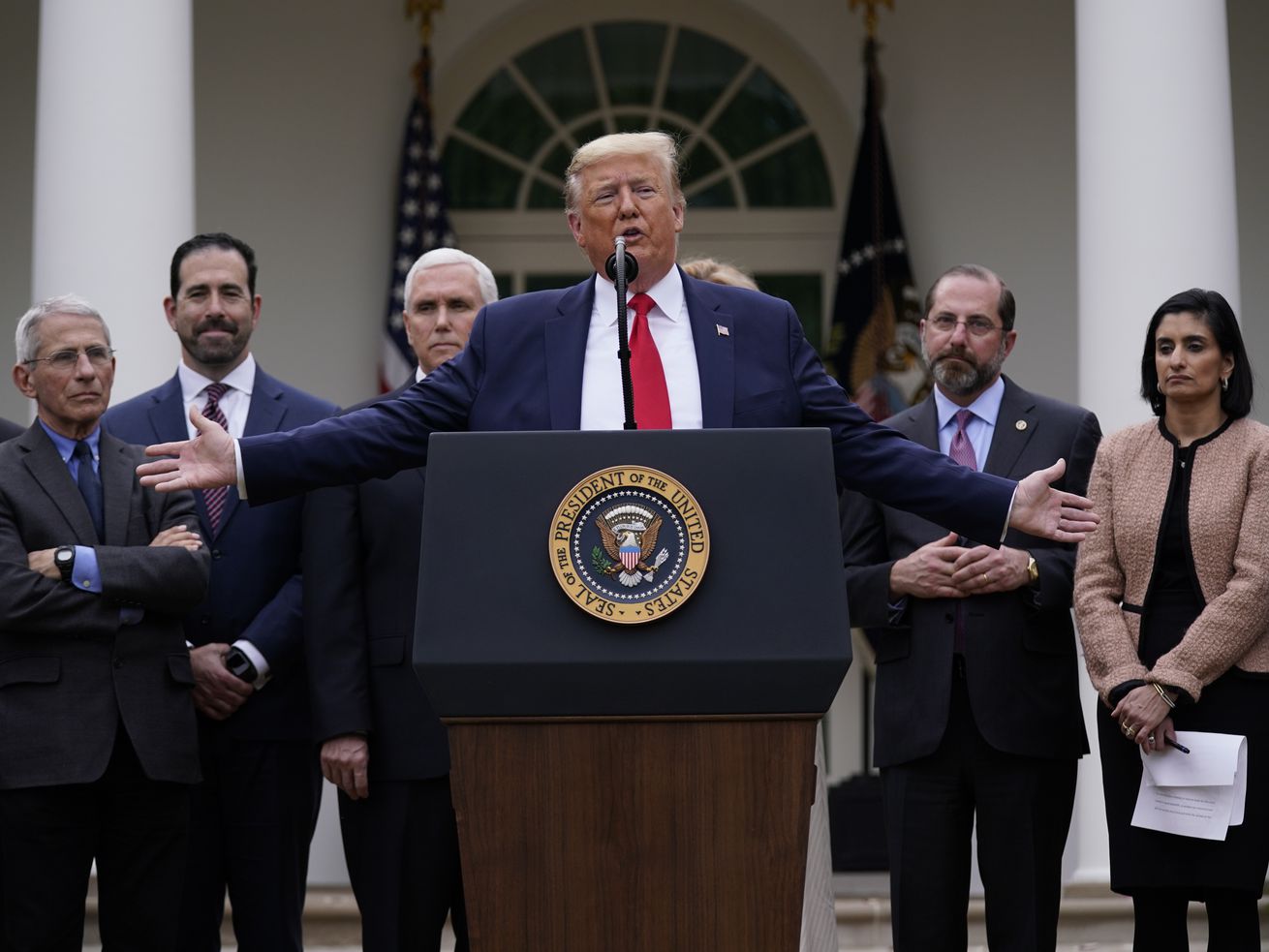 Evan Vucci, Associated Press
 Cristyna Ramos, family involvement paraprofessional at Backman Elementary School, hands out food for students on Monday, March 30, 2020, as the Tony Finau Foundation and For The Kids work with volunteers in feeding 500 children each week at both Backman and Liberty elementary schools to ensure these at-risk children are fed through May due to COVID-19. | Scott G Winterton, Deseret News


